Understanding The Art Of Miniature Paintings
What is Miniature Painting?
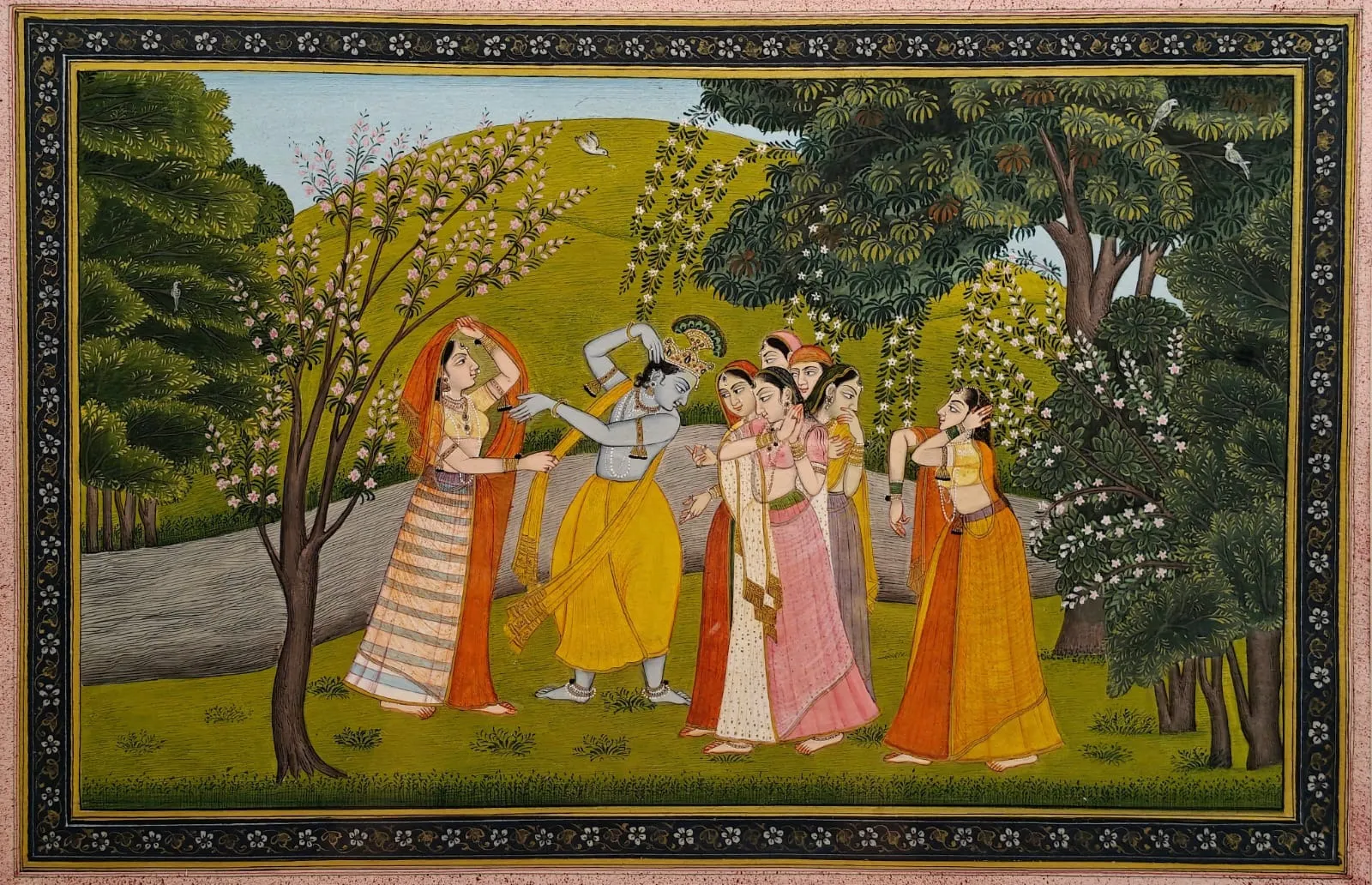
(Manav Panchatatva (The Five Elements of Human Existence) | Priyanka Kumawat | Natural colors, original gold on handmade paper | 14 X 10.5 inches)
(The Journey Of The Tortoise | Priyanka Kumawat | Natural colors, original gold on handmade paper | 12 X 10 inches)
Key Traits:
- Size: The design of this art form is so intricate and small that it must be held, rather than hugged. It often forms part of a book or an album.
- Details: This artwork is created using a single hairbrush, with every pattern being exceptionally detailed and deliberate.
- Purpose: The aim of creating this art is to share the stories behind each piece, as every creation tells a story about the tiny, beautiful world it represents.
The Craft Behind Miniature Art
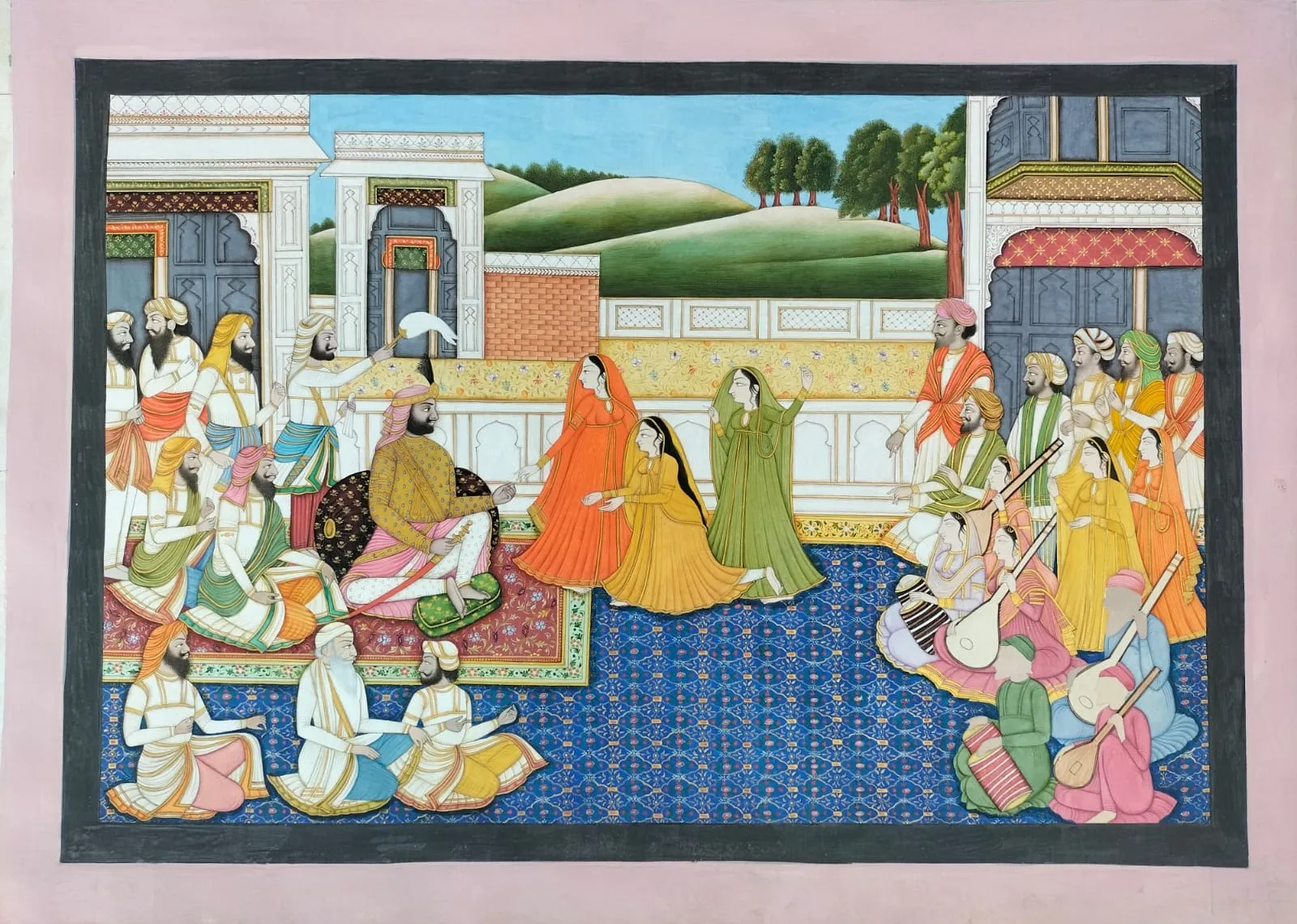
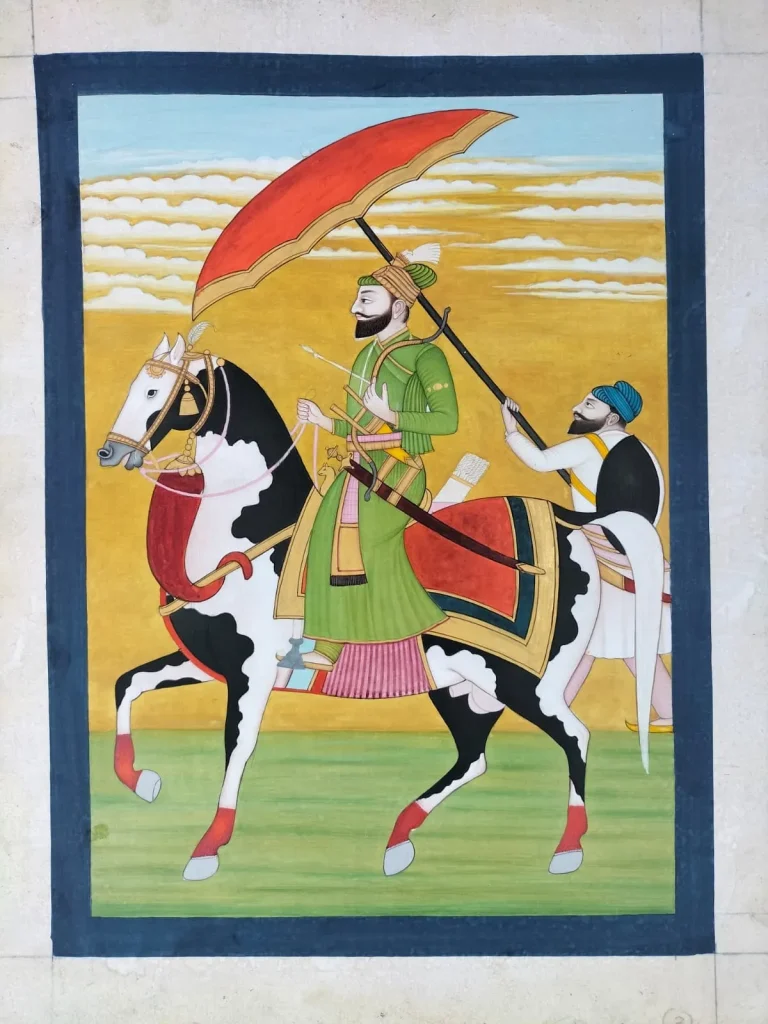
(Maharaja Sher Singh Enjoying a Nautch | Om Prakash Kumawat | Natural colors, original gold on handmade paper | 15.7 X 22 inches)
After viewing these beautiful artworks, many people wonder: How are miniature paintings made? Creating a miniature painting requires dedication and a calm mindset, as it is a slow process that can take weeks or even months to complete. The process involves several meticulous steps, including:
- Preparing the Surface: Artists paint on “wasli,” a type of handmade paper that is layered and burnished until it is smooth. Some artists use silk or wood because the smoother the surface, the finer the designs can be rendered, resulting in a unique style that emerges beautifully.
- Sketching with Care: A light, fine outline is drawn with a very fine brush or a pencil. The composition is planned first; nothing can be improvised at this stage.
- Natural Colours: Traditional colours came from minerals, plants, and even precious stones. Lapis lazuli for blue, malachite for green, gold and silver leaf for ornamentation. Each pigment is ground by hand and mixed with glue.
- Layering & Detailing: The paint is applied, and a transparent layer known as “PARDAZ”; shading is done by the tiny dots and lines; brushes are made up of camel hair.
- Burnishing: Once the artwork is dry, the painting is brushed with a smooth stone. This process sets the colour and gives an even flow and glow. The painting feels alive, and gold literally gleams.
How to Read Miniature Paintings
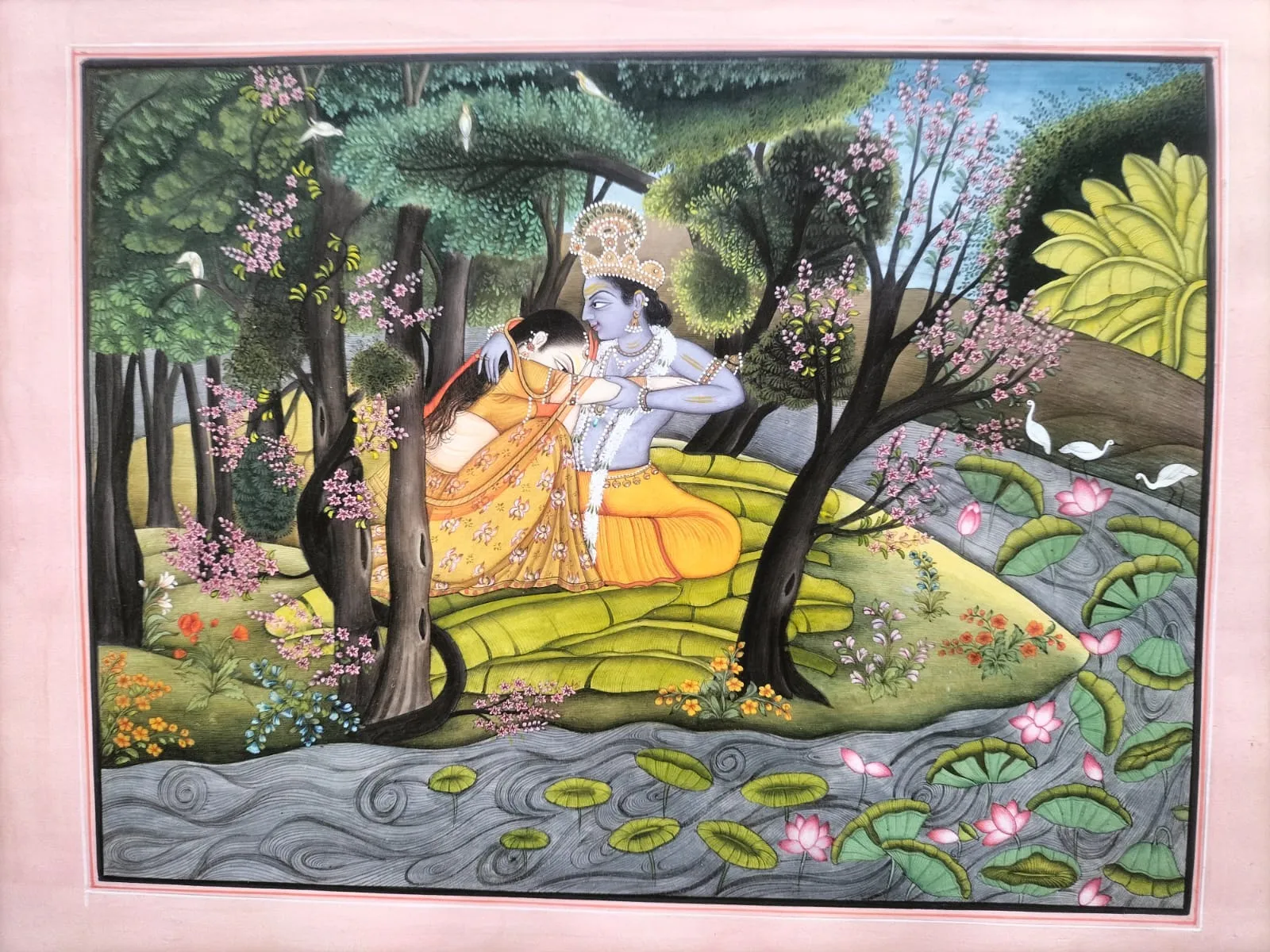
(Radha and Krishna | Priyanka Kumawat | Natural colors, original gold on handmade paper | 12 x 15.6 inches)
This art form requires a calm mind and a great deal of patience. Similarly, to truly understand and appreciate this art, one needs to take time and, most importantly, exercise patience. This art form is unique because it cannot be appreciated in a rush. To fully understand it, you must pay attention to its slow and intricate details.
- Look at the whole scene first: Understand the first figure that catches your attention, and look for the main figure in the painting.
- Zoom into details: Check every single element in detail- clothing, border, background, and the artist’s hidden jokes and messages in these elements as clues.
- Notice the significance of color choices: Each color used has an important meaning. For example, “deep red” represents power, while “blue” signifies calmness, divinity, or night.
- Find the story. Most of the miniature paintings are part of a series; once all these paintings are connected, they showcase a bigger narrative.
Why Do Miniature Paintings Still Matter Today?
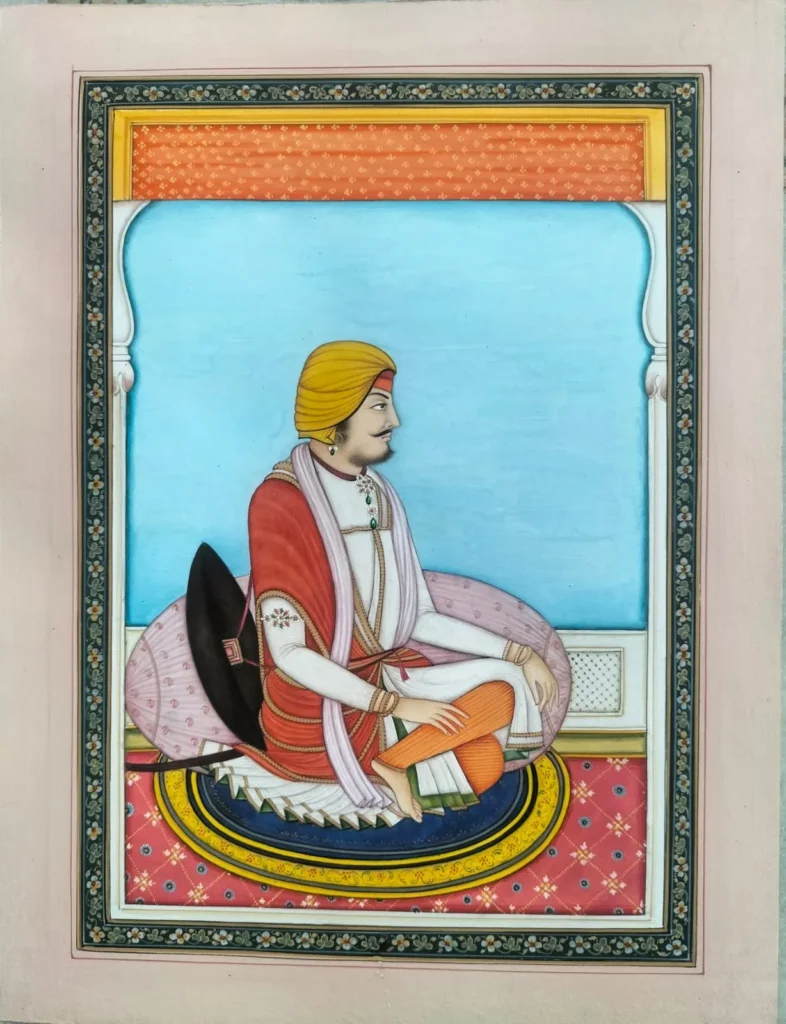
(Sardar Gulab Singh Atariwala | Om Prakash Kumawat | Natural colors, original gold on handmade paper | 12 x 9 inches)
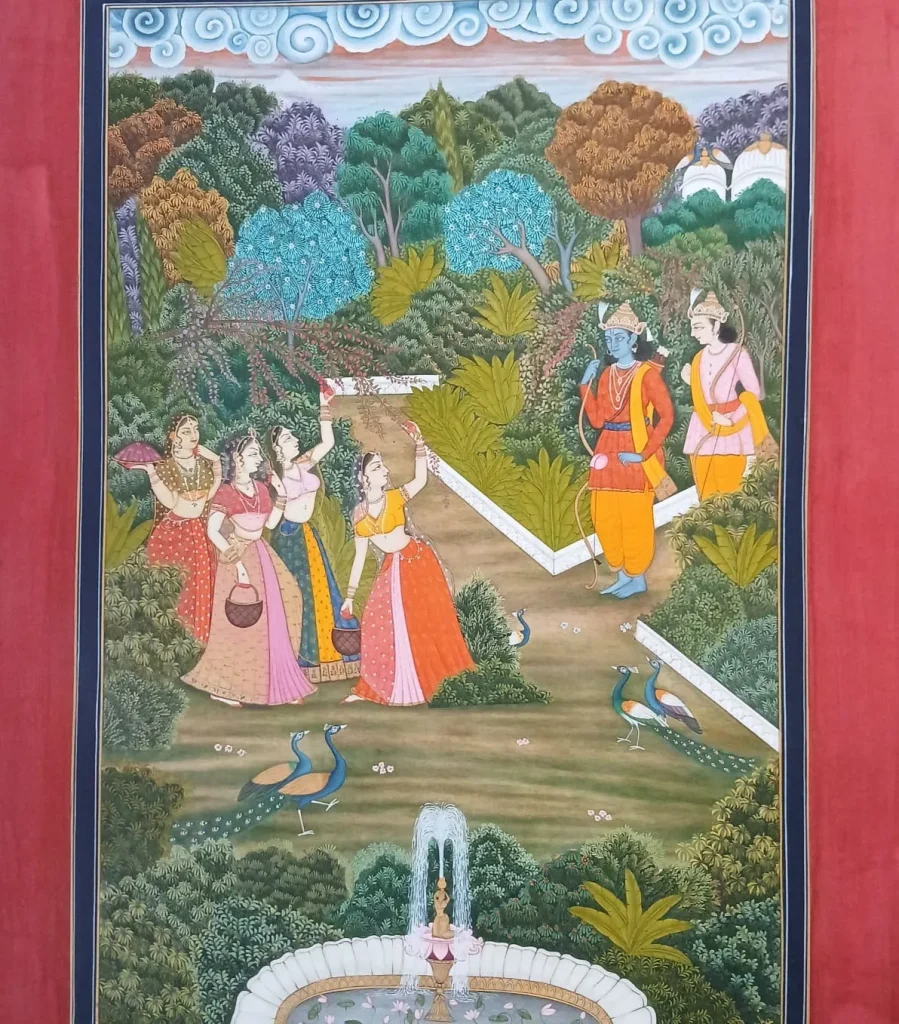
(Lord Shri Ram | Om Prakash Kumawat | Natural colors, original gold on handmade paper | 12 X 9 inches)
- Skill: This unique art form requires a level of hand control and patience, and to learn this, people spend many years mastering this style.
- Cultural Memory: The artists preserved memories in these tiny creations as cultural memory, memories of late 17th-century lives and culture. Just imagine how beautiful it is to dip into a different world with these tiny miniature paintings and experience a world through our own eyes.
- Modern influence: Many fashion designers and tattoo artists borrow motifs from the miniature paintings and re-created it into different styles for different purposes, except for the miniature paintings themselves.
- Accessibility: You don’t need to be an art expert to enjoy these miniature paintings if you understand the story, feel connected, and like it; you understand the miniature.
Final Thoughts
Miniature paintings are much more than finely detailed artworks on a small scale; they are living archives of culture, devotion, storytelling, and artistic discipline. Every delicate line, carefully prepared pigment, and hand-painted detail reflects a tradition shaped by patience, precision, and generations of mastery.
At AIM Gallery, this legacy continues through an exceptional collection of miniature artworks by the father-daughter duo Om Prakash Kumawat and Priyanka Kumawat. While Om Prakash Kumawat’s works reflect decades of mastery across traditional miniature styles, Priyanka Kumawat brings a fresh yet deeply rooted perspective to the form, carrying the tradition forward with grace and detail. Together, their works beautifully represent the continuity of miniature painting across generations.
Browse the collection today and bring home a piece of heritage, storytelling, and craftsmanship that will remain timeless in your space.