Sanjhi Art: The 500 Year-Old Paper-Cutting Tradition
Sanjhi Art, often called the “Sacred Art of Mathura and Vrindavan”, is one of India’s most delicate paper-cutting traditions, preserved since the 16th and 17th centuries. Rooted in Braj, the land of Lord Krishna, the word Sanjhi comes from Sanjh, meaning evening. For centuries, the women of Vrindavan practiced this art at dusk, creating intricate visual designs to depict scenes from Krishna’s life and the Raas Leela. Today, the heritage is kept alive by just 14 to 15 traditional families in Mathura.
The Making of Sanjhi Art
Unlike complex rangolis or other resource-heavy art styles, Sanjhi requires no expensive equipment. An artist needs only thin paper and a pair of custom, sharp scissors or blades. Beyond paper, Sanjhi can also be created on wooden surfaces, clay, or banana leaves.
The process demands immense time and steady hands. Because the patterns are so interconnected and fine, a single wrong cut can ruin hours of work. This intense focus has earned it the title of “The Art of Patience.”
Over time, this traditional practice evolved into a recognized art form. Today, artists create Gond art paintings on paper, canvas, and other mediums, making it accessible to a wider audience.
An Evening Ritual: The Bhakti Movement Connection
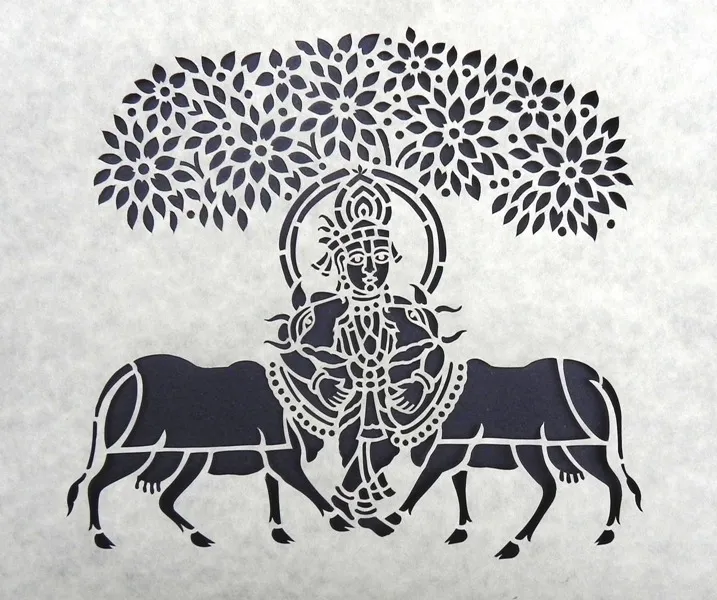
(Sanjhi Art | 10 X 9.7 inches)
Originating during the height of the Bhakti Movement, Sanjhi was deeply tied to temple worship in Vrindavan. Devotees created these patterns to narrate Krishna’s leelas (divine plays) during the evening aarti.
The women of Braj memorized these complex geometric and figurative patterns through daily practice, passing the skill down through generations. In today’s era, interest in learning such precise heritage crafts has declined, leaving only about 20 recognized master artists across India holding the tradition together.
Why Sanjhi Art Is Called The “Lost Art Of Braj”
Sanjhi earned its reputation as the “Lost Art of Braj” due to a mix of strict traditional practices and modern economic realities.
- Unforgiving Precision: The beauty of Sanjhi lies entirely in its negative space, the cuts that let light pass through. Because everything is hand-cut with fine blades, there is zero room for error.
- Ephemeral Nature:v Historically, Sanjhi was never meant to last. It was created on floors or water using dry colors and flowers, disappearing by the end of the day.
- Modern Challenges: Today, only two or three temples in Vrindavan still practice traditional Sanjhi. It is highly time-consuming, and young generations often look for more stable career options over long apprenticeships. Furthermore, modern concrete floors and contemporary housing layouts lack the mud-plastered courtyards where traditional dry-powder Sanjhi was originally laid out.
5 Things You Don’t Know About Sanjhi Art
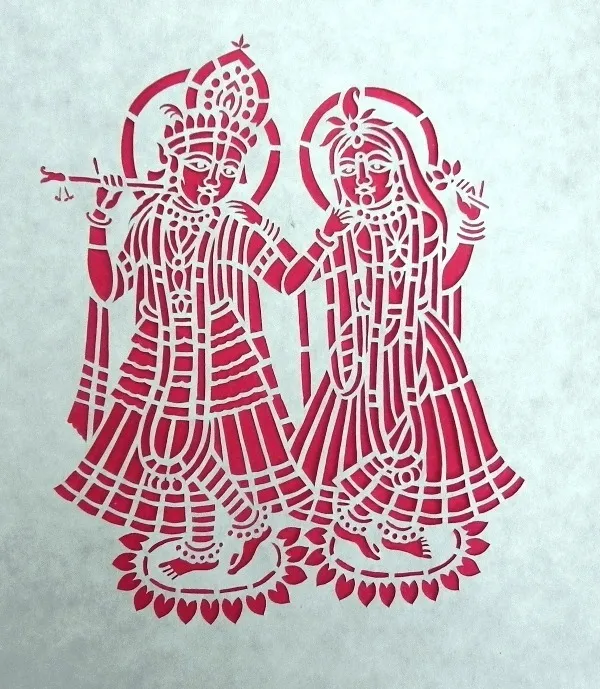
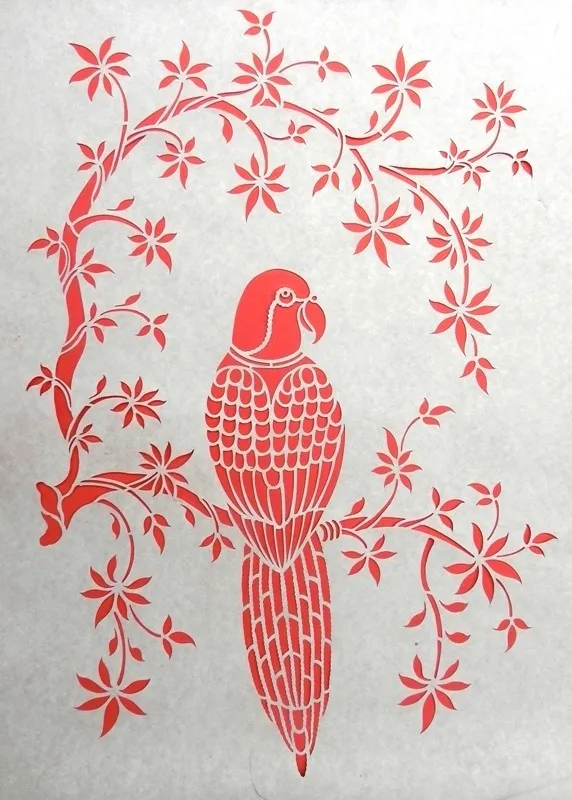
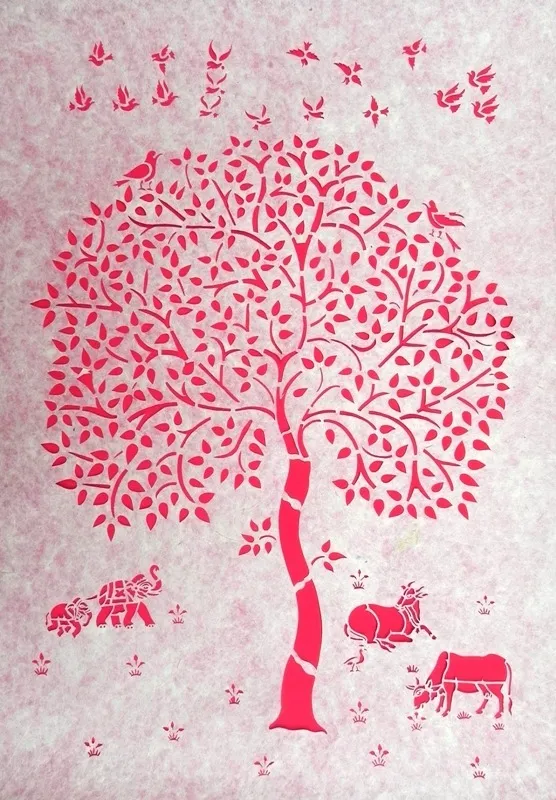
(Sanjhi Art | 20 X 28 inches and 29 X 22.5 inches)
- It began in secret: It started as a private, closed-door ritual.
- A romantic origin: Tradition holds that Radha and the Gopis first created Sanjhi patterns to win Krishna’s attention.
- Irreplaceable tools: The custom-made, slightly curved scissors used by the craftsmen are passed down as family heirlooms.
- The water illusion: Master artists can create Sanjhi stencils that float on water, allowing them to paint vibrant rangolis directly on the water’s surface.
- Interior design revival: The art has survived modern times by shifting from temple floors to framed wall art and home accessories.
From Temples’ Floors To Home Decor
These updated designs fit naturally into modern homes as wall hangings, clocks, and partitions, bringing an organic, handmade aesthetic to minimalist spaces.
Conclusion
At AIM Gallery, you can experience such traditional and contemporary artworks up close, through thoughtfully curated art exhibitions in Chandigarh, workshops, and a platform that supports both emerging and established artists.