Registered Address: SCO-11 (IInd Floor), Cabin No.1, Sector-17E, Chandigarh – 160017, India. (The gallery is open by appointment only.) sales@aimgallery.in
The artistic heritage of India is one of the most unique ones, because each and every region tells its tale through patterns and colors. While classical Indian art can get the lion’s share of attention, Indian folk art is the true soul of India. Artworks created using folk art are developed by the local people, who have been creating art through many generations. Folk art shows festivals, rituals, myths, nature, and life in general rather than the principles of art.
Unlike modern art, Indian folk art is directly linked to the culture of the people who are creating it. The cultural meaning and significance are embedded in every single one of these artworks, which makes them something more than decorative items. Be it the raw aesthetics of Warli paintings or the narrative style of Madhubani paintings, these traditional art styles have continued to inspire artists around the world.
What Is Folk and Tribal Art?
Folk Art of India is the type of art made by people who come from the countryside and uses the art style passed down to them. This culture revolves around festivals, religion, agriculture, and religious activities. Artists get to learn these types of art from their families and not from any kind of education.
However, tribal art of India is very much related to the tribes of India. Such types of art revolve around spirituality, folklore, wildlife, and balance in nature and humanity. The artists make use of such natural materials as clay, natural color pigments, charcoal, and brushes for such types of art.
Despite having different origins, the two forms of art share the same function.
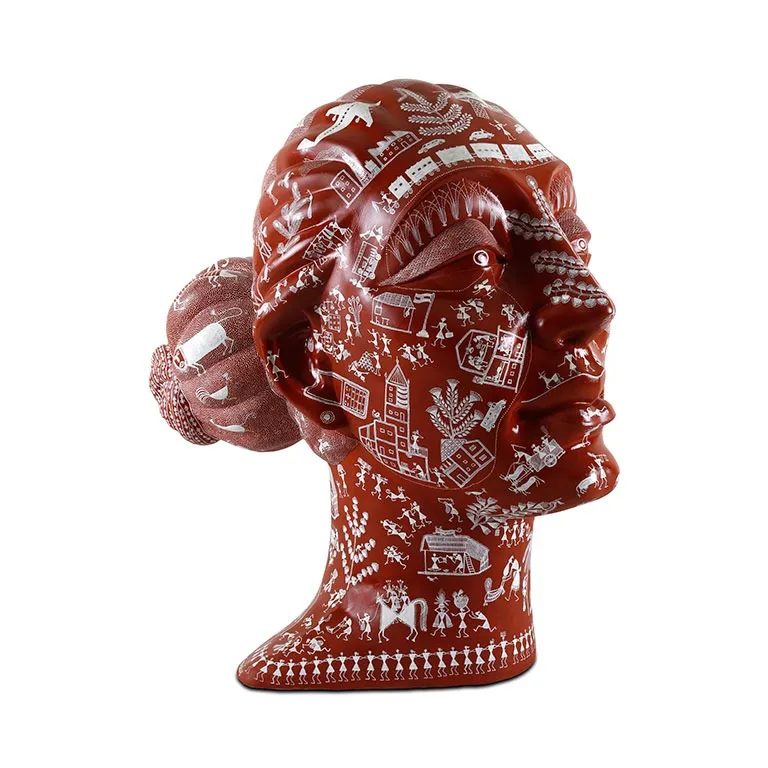
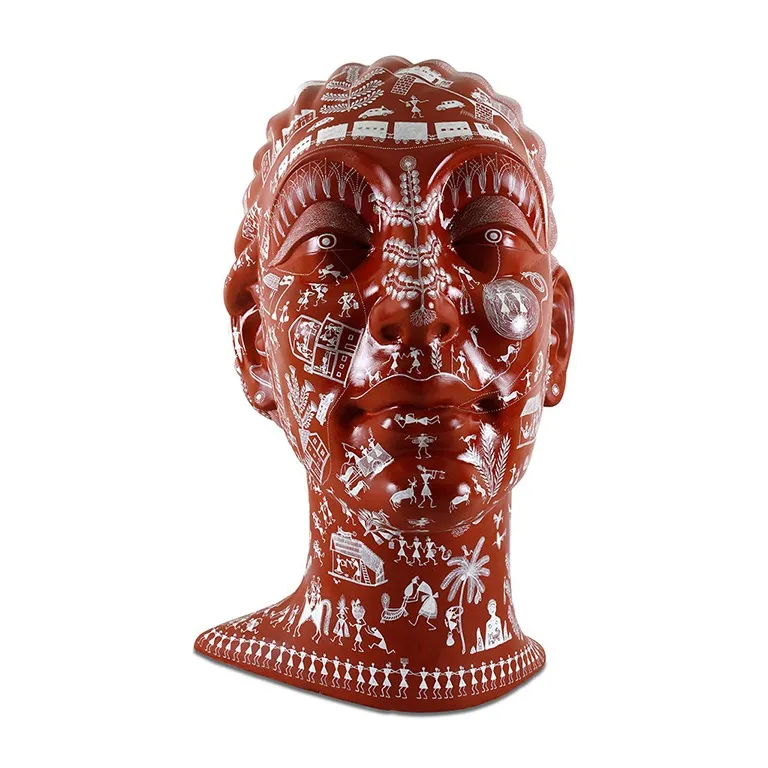
(Mother Nature (Warli Painting) | Anil Chaitya Vangad | Acrylic and automative paint on fiberglass | 42 X 38.5 X 26.5 inches)
(Mother Nature (Warli Painting) | Anil Chaitya Vangad | Acrylic and automative paint on fiberglass | 42 X 38.5 X 26.5 inches)
Why Folk and Tribal Art Matters Today
In addition to being aesthetic in nature, Indian folk arts also have the ability to preserve languages, traditions, and myths that might be lost otherwise. In addition, they provide a means of earning a living for many Indian artists.
With the increasing demand worldwide for original art, more and more people are realizing the unique quality and value of such arts and crafts. People are coming to understand that the work of the artisans behind the folk art of India represents a living tradition rather than mere decorative pieces.
These art forms also contribute to tourism and education. Art and culture festivals in India provide an insight into the significance of such arts historically while also providing avenues for artisans to promote and preserve their culture for future generations.
Above all, such forms of art make us realize how important creativity has been in the daily life of Indians. Houses, temples, festivals, and even walls in villages were all used as a medium of artistic expression.
Popular Types of Folk Art in India
There are many regional painting styles in India, and there are several popular types of folk art in India, such as:
Madhubani Painting (Bihar) – famous for its ornamental style, mythology, and use of natural colors.
Pattachitra Painting (Odisha & West Bengal) – story-based paintings inspired by myths.
Phad Painting (Rajasthan) – large-sized scroll paintings based on heroic legends.
Kalamkari Painting (Andhra Pradesh & Telangana) – hand painting or block printing on cloth paintings based on mythological subjects.
Gond Art (Madhya Pradesh) – tribal paintings featuring dots & lines along with animals.
Pithora Paintings (Gujarat & Madhya Pradesh) – ritual paintings that are performed during important festivals.
This list clearly shows how these regional art traditions differ from one state to another while keeping their cultural identity intact.
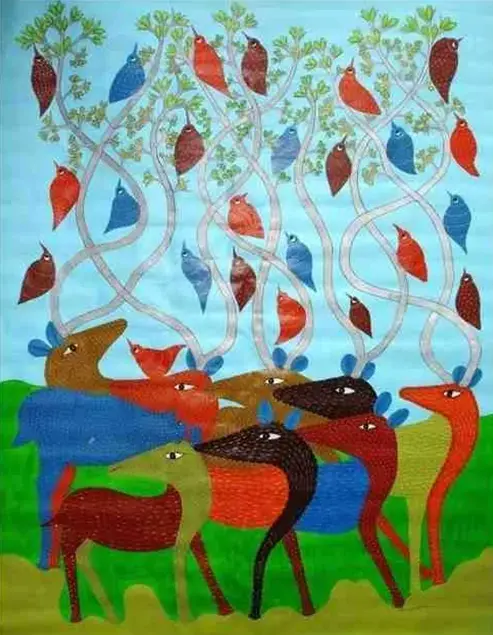
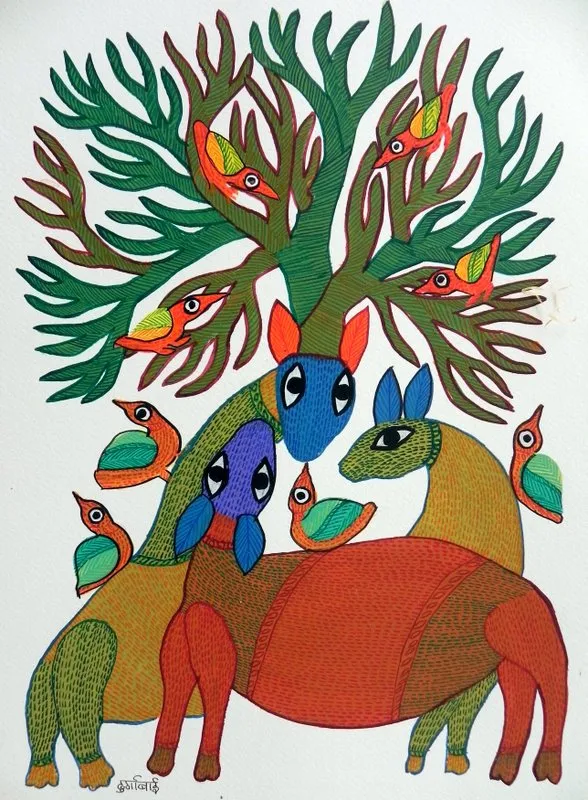
(Deer & Birds | Suresh Kumar Dhurve | Acrylic on canvas | 82 X 61 inches)
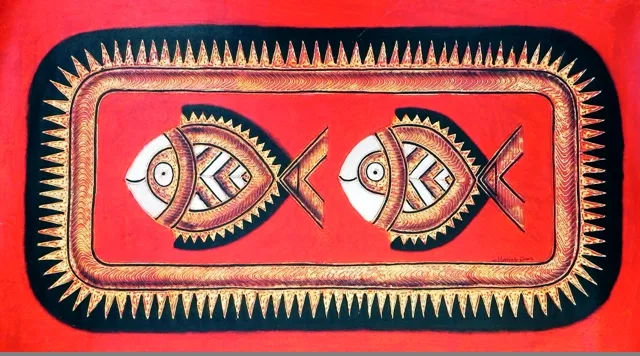
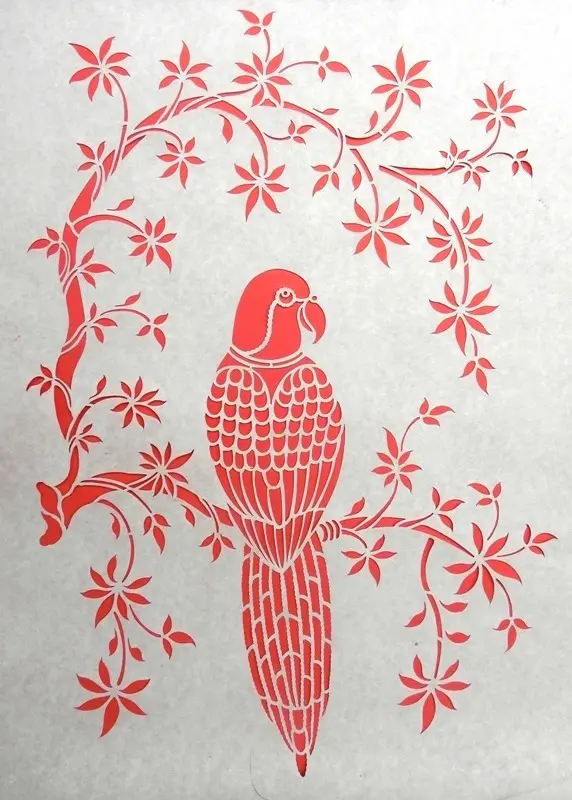
(Sanjhi Art || | Sanjhi | 20 X 28 inches)
Traditional Art Forms of India and Their Unique Features
Each area has cultivated its own unique form of art which is shaped by the local environment, climatic conditions, and social practices. This variety has made the artistic traditions of India very colorful because each style represents the uniqueness of the community in which it originated.
One thing that makes traditional art forms of India unique is the way they differ greatly depending on various factors. Each tribe has evolved a distinctive artistic language based on its geographical location, religion, and natural resources.
Some of the elements common in the folk paintings include bold lines, vibrant colors, and nature-based designs such as flowers, animals, birds, and daily life activities. Repetitive patterns are typical of tribal arts and used to symbolize the forest, ancestors, and spiritual concepts. Paints are made from natural materials such as leaves, flowers, charcoal, and mud.
Another uniqueness of these art forms is the fact that they are not centered around the artists’ reputation. On the contrary, they emphasize community traditions when knowledge is passed from generation to generation within families.
How Folk and Tribal Art Continue to Inspire Modern India
However, despite having started ages ago, Indian folk art has still not ceased to develop. Modern painters mix the techniques of their ancestors with the patterns that are topical at the present time. Interior designers and art collectors become more and more fond of using paintings inspired by folk art in their homes, workplaces, and galleries.
Tribal art of India is also promoted by many educational establishments, exhibitions, and art galleries through introducing these fantastic types of art to young people. The Internet has become one more platform for promoting the works of regional artists.
The growing interest in Indian folk art is beneficial both for preserving the cultural heritage and motivating artisans to work on their craft.
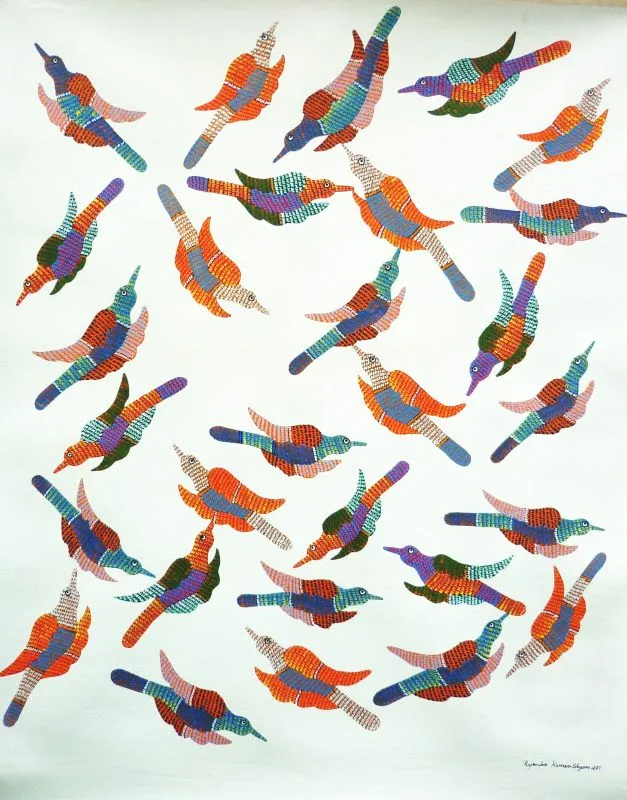
(Untitled | Rajendra Kumar Shyam | Acrylic on canvas | 29.5 X 35 inches)
(Untitled | Durga Bai | Acrylic on Paper | 11 X 15 inches)
Final Thoughts
Indian art has much more significance beyond just being beautiful creations. This artistic tradition has continued to link generations to each other through storytelling and artistry in village walls and modern galleries. This journey through the traditional art forms of India is sure to provide insight into India’s rich cultural heritage while helping maintain traditions through the support of artists.
If you are interested in exploring authentic regional artworks, tribal masterpieces, and traditional Indian art collections, visit AIM Gallery.
In general, folk art is produced by rural artisans, while tribal art in India is created by local indigenous people and emphasizes nature and spirituality.
Traditional art forms of India preserve cultural heritage, help local artisans earn their livelihoods, and pass history and customs between generations.
To provide the best experience while browsing AIM Gallery, we use cookies to improve website functionality, understand how visitors use our site, and, with your permission, deliver relevant marketing content. You can accept, deny, or customise your cookie preferences at any time. Some features may not function properly if certain cookies are disabled.
Functional
Always active
These cookies are essential for the proper functioning of the AIM Gallery website. They enable core features such as page navigation, secure browsing, remembering your preferences, and ensuring the website operates correctly. These cookies cannot be disabled.
Preferences
The technical storage or access is necessary for the legitimate purpose of storing preferences that are not requested by the subscriber or user.
Statistics
These cookies help us understand how visitors interact with our website by collecting anonymous information such as pages visited, time spent on the site, and overall website performance. This data helps us improve the browsing experience and the content we provide.The technical storage or access that is used exclusively for anonymous statistical purposes. Without a subpoena, voluntary compliance on the part of your Internet Service Provider, or additional records from a third party, information stored or retrieved for this purpose alone cannot usually be used to identify you.
Marketing
These cookies may be used to deliver relevant promotional content, measure the effectiveness of our marketing campaigns, and remember your interests across visits. They are only enabled with your consent.