The Role of Pastels in Indian Contemporary Art
While pastels have been popular in Western art for centuries, their use in India is still relatively new and refreshingly experimental. Soft pastels, oil pastels, and pencil pastels have become powerful tools of expression for many Indian artists, offering immediacy, texture, and a deeply personal connection between hand and surface.
Let’s take a closer look at how pastels are changing the visual language of Indian contemporary art and why so many artists are turning to them to tell their stories.
What are Pastels?
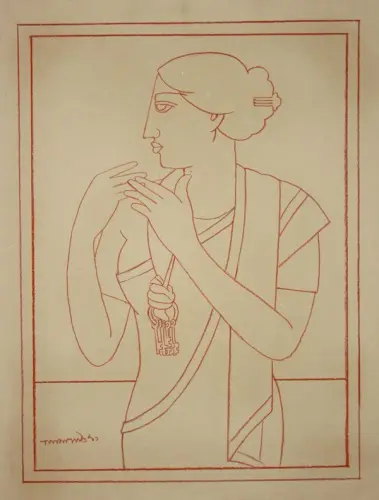
(Untitled | Lalu Prasad Shaw | 15″ x 20″ | Pastel on board)
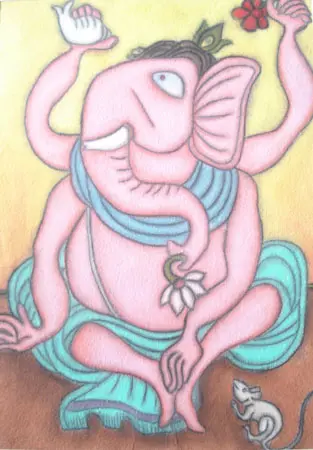
(Untitled | Prokash Karmakar | 21″ x 29″ | Dry pastel on paper)
Pastels are made by combining powdered pigments with a binder and rolling them into sticks. Depending on their composition, they can be soft, hard, or oil-based. Soft pastels are perfect for blending and creating smooth transitions between colors, while oil pastels are known for their creamy texture and bold hues.
What sets pastels apart from mediums like watercolor or acrylic is how direct they are. There’s no brush between your hand and the paper. The pigment goes straight from your fingers to the surface. This intimacy makes it easier for artists to convey raw emotion, fleeting light, or a sense of movement.
How Indian Contemporary Artists Use Pastels?
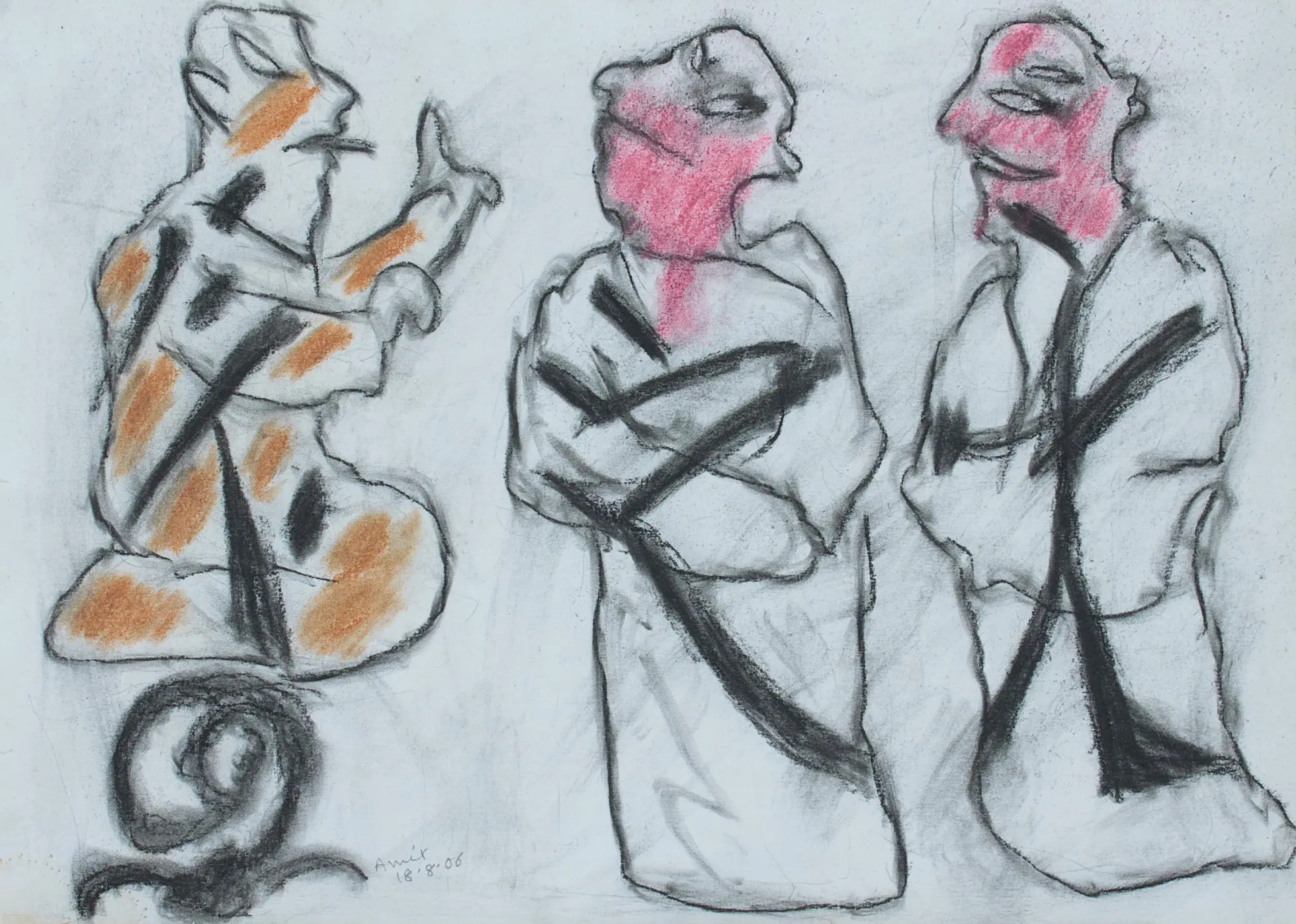
(Untitled | Amit Ambalal | 12″ x 26″ | Pastel charcoal on Paper)
Famous Indian Artists Working with Pastels
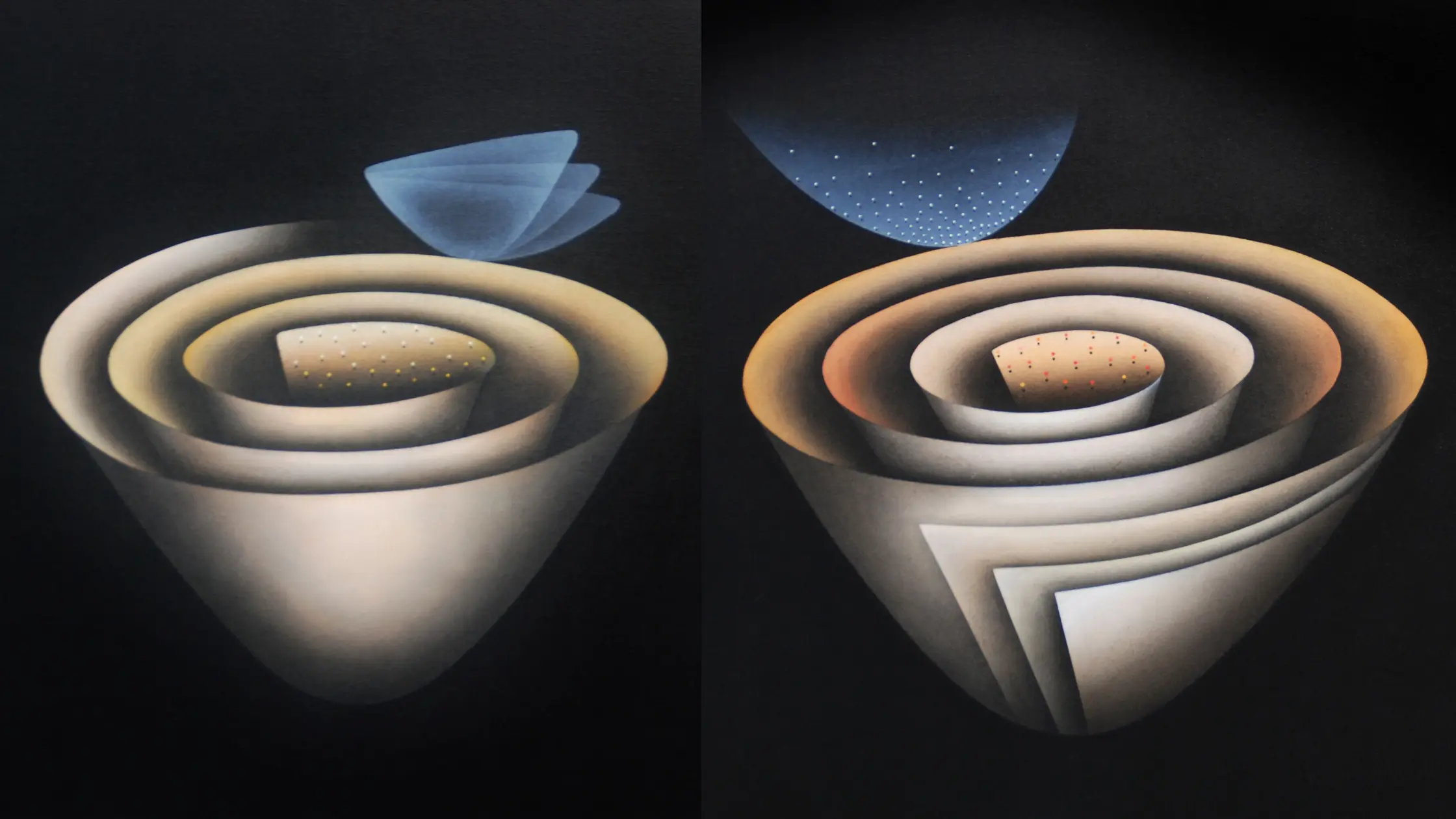
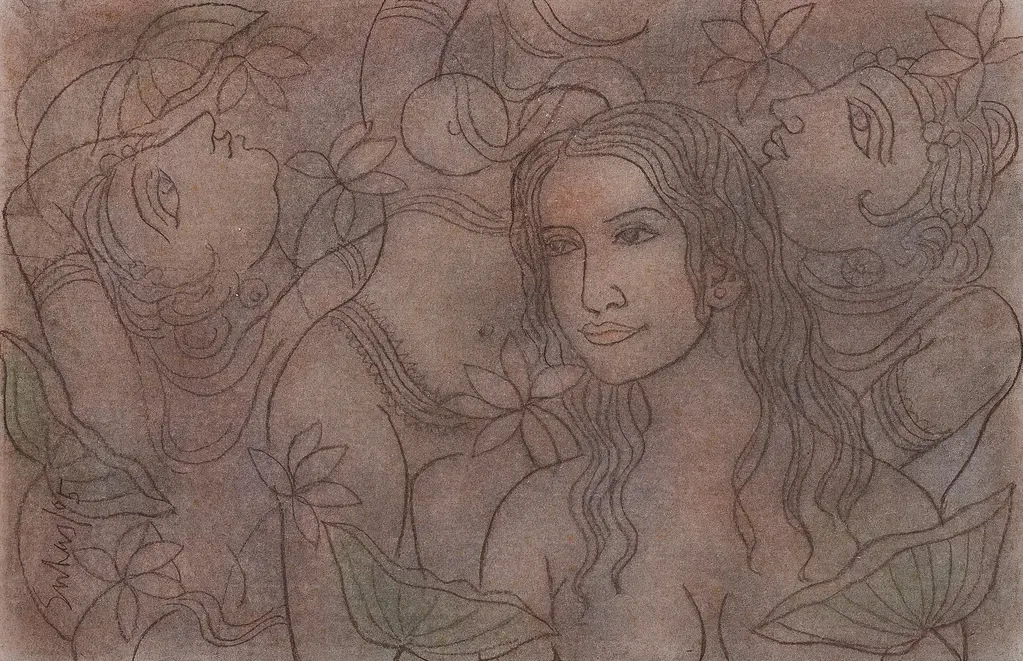
(Untitled | Suhas Roy | 19.5″ x 30″ | Pastel on paper pasted on cardboard)
Pastels may not have been the first choice for most Indian artists, but over the years, they’ve found a meaningful place in the world of Indian contemporary art.
Here are a few well-known Indian artists who’ve beautifully worked with pastels and brought out their full potential:
- Suhas Roy: Known for his soft pastel portraits of women that radiate grace, emotion, and poetic stillness.
- Hemant Rao: Creates abstract pastel compositions that explore mood through color and quiet texture.
- Prokash Karmakar: Brought bold energy and vibrant chaos to pastels through expressive landscapes and figures.
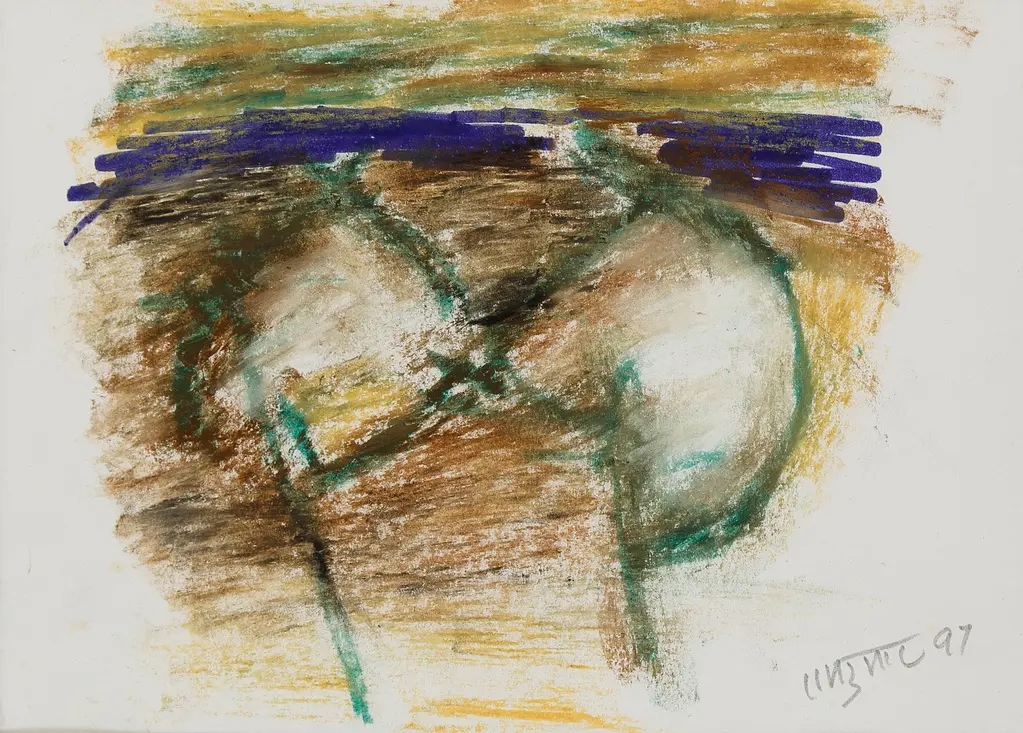
- Ram Kumar: Used pastels to reflect introspection, solitude, and spiritual depth with quiet restraint.
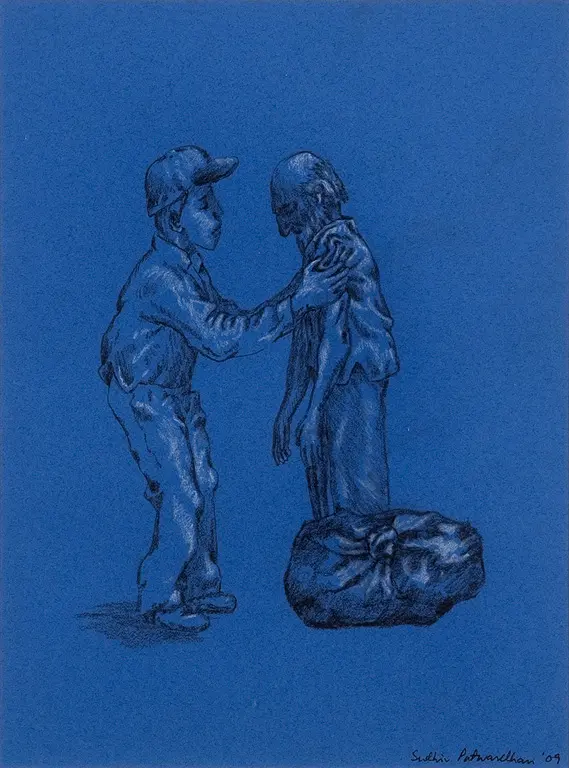
- Sudhir Patwardhan: Captured the dignity of everyday life with raw, honest pastel sketches of working-class people.
- Lalu Prasad Shaw: Blended Bengali folk aesthetics with pastel portraits marked by elegance and tradition.
- Amit Ambalal: Infused humor and storytelling into pastel art, drawing from mythology and daily life with wit.
Each of these artists has shown us a different side of what pastels can do—whether it’s soft emotion, bold energy, or cultural storytelling. While pastels might seem like a delicate medium, in the hands of these creators, they become powerful tools of expression.
Evolution of Pastel Medium in Indian Art
(Untitled | Ram Kumar | 5.25″ x 7.25″ | Dry pastel and marker on paper)
Pastel vs Watercolor in Indian Art
(Untitled | Sudhir Patwardhan | 8.5″ x 11.5″ | Pastel on paper)
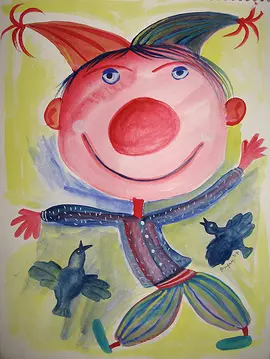
(Untitled | Shefali Nayan | Watercolor on paper)
Why Pastels Are Here to Stay in Indian Art?
The growing presence of pastels in Indian modern art is not just about experimenting with materials. It’s about finding a direct, honest way to connect with one’s subject. In an art world that celebrates speed, authenticity, and emotion, pastels offer something truly valuable.
For example, the use of soft pastels in Indian figurative painting allows for sensitive rendering of human features like skin, hair, and clothing, all with a sense of depth and emotion that feels real and personal.
Whether used to capture the stillness of a village morning or the chaos of a city street, pastels let artists work fast without sacrificing detail or feeling.
Conclusion
As India’s art scene continues to expand, pastels in Indian art are no longer on the sidelines. They’re becoming central to a new wave of expression—raw, colorful, and deeply personal. With more artists taking up the medium and collectors showing interest, contemporary pastel painting styles in India are carving out a beautiful niche.At AIM Gallery, we’re proud to showcase this evolving journey. And in a country like India with rich color, texture, and tradition, pastels feel like the perfect fit.
Have a look at our featured artworks on our Instagram page, and feel free to DM us for any queries or artwork inquiries. We’re always happy to connect and assist!