Warli Art: A Journey Through Tribal Life and Culture
Ever wonder how diverse our Indian culture is? Every single region is distinct from the others.
Although we are moving forward to adapt to modern culture, we remain rooted in our traditional lifestyle. It’s a saying among Indians that wherever they go around the world, their hearts and cultural practices remain with them throughout their lives.
As Indians, we are advancing into a modern world while still holding on to our traditional values. We are well-known not only for our rich cultural heritage but also for sharing positivity and values with the world through our traditional art forms.
One of the famous art forms is “THE WARLI ART”. It is also available in “the best online art galleries in India” today. This unique art style is created by the Warli people from North Maharashtra. It is primarily practiced in towns such as Dahanu, Talasari, Jawhar, and Palghar, all located in Maharashtra.
The Essence of Warli Art: Symbolism and Meaning
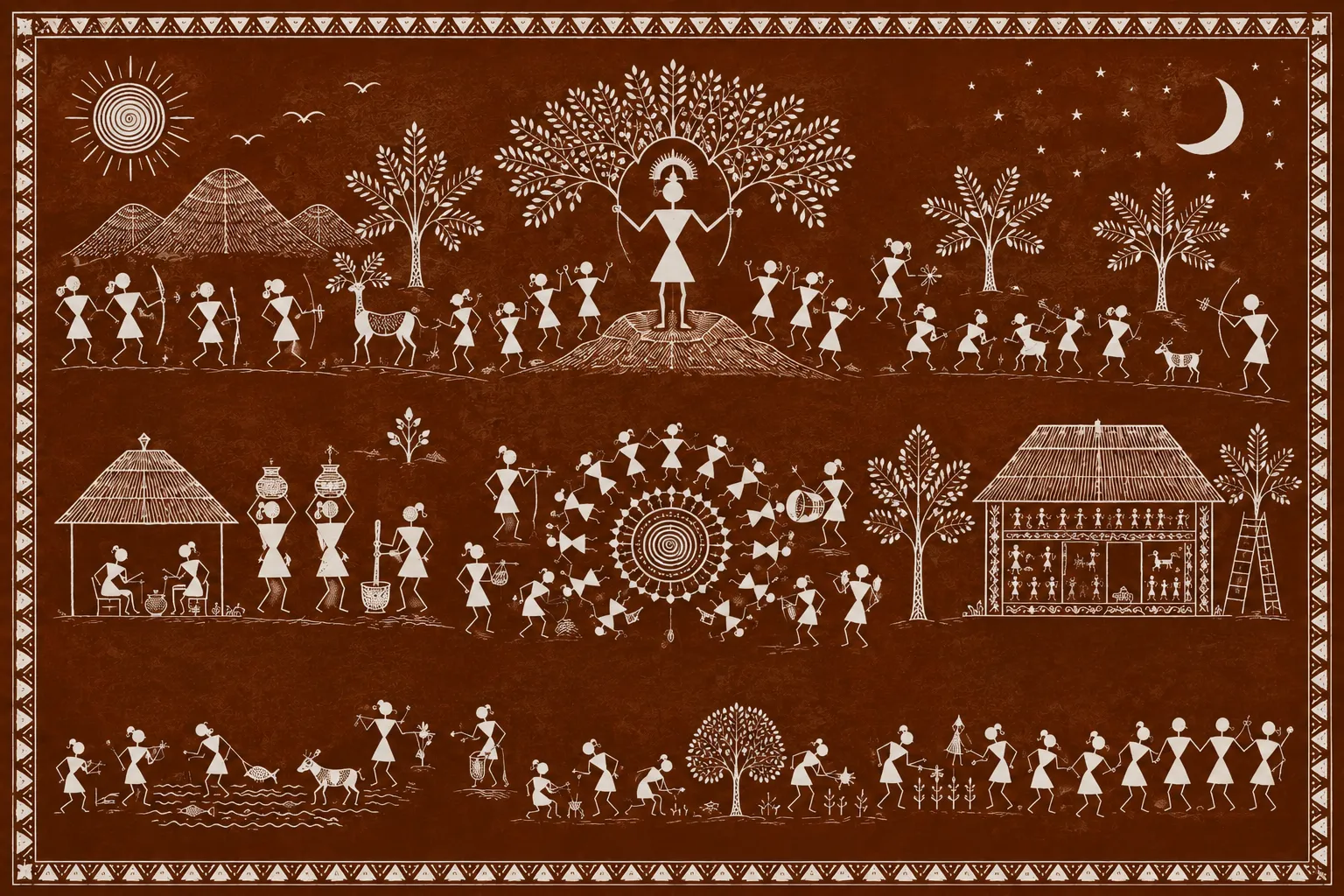
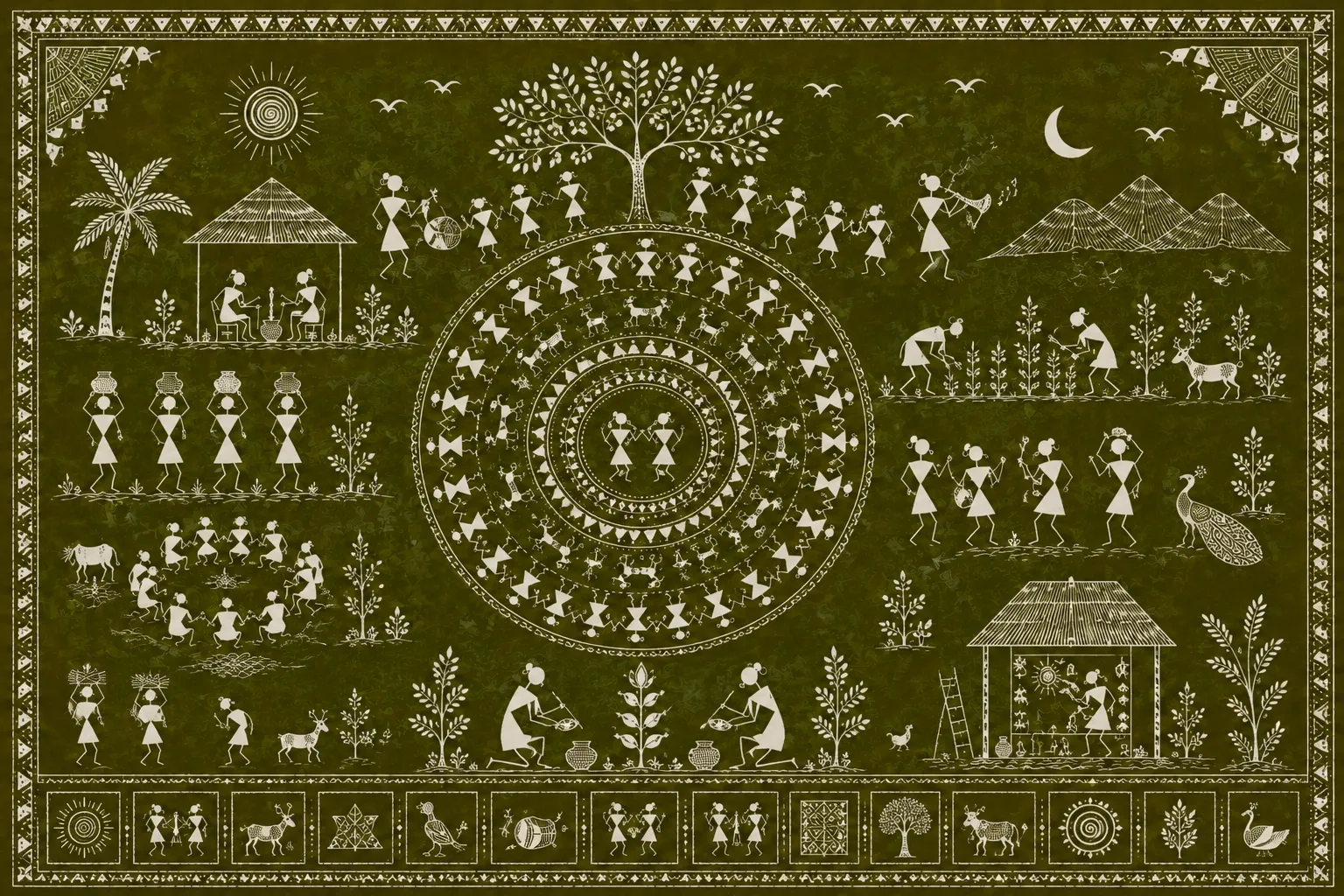
This Art mostly represents the beautiful concept of protecting Mother Nature, and it is usually focused on farmers. The paintings are made on mud walls with rice paste. They depict basic elements like animals, forests, and farmers’ activities in a geometrical shape that looks attractive and eye-catching. The Warli tribe greatly respects Nature and Mother Earth for constantly providing food, nutrition, and nourishment to them.
However, each element carries a deep meaning:
- The circle represents the sun and moon, also symbolising the circle of life.
- The triangles are represented by trees and mountains, while the square is seen as a sacred symbol. Altogether, these symbols and shapes form a visual language that defines the true bond between human and Nature.
Unlike other traditional art forms, Warli Art doesn’t represent gods; instead, it celebrates nature, daily life, and farming. Most iconic depictions of “The Tarpa dance” show figures dancing around a musical instrument called “tarpa” in a circle. “Tarpa is basically a traditional instrument”. These images represent the joy, brotherhood, and collective spirit of community.
Another well-defined feature of Warli art is their concept of storytelling beautifully through art, without using a single written word; the artists represent complex emotions and Ideas through visual elements. Each painting reflects the view where humans peacefully coexist with animals, plants, and the environment, which highlights the deep respect for nature.
Materials Used in Warli Art
The traditional Warli art starts from the wall itself. An artist prepares a mud wall coat with red or brown Earth. The paint used in this art form is simple rice paste mixed with water, applied with a bamboo stick used like a brush.
This is the reason the lines and design look raw and unbroken. Imagine this type of artwork made without a ruler or outlines. just a creation of a freehand shape, not just an art, but symbolizes the emotion of the artists through their paintings. The use of a white rice paste mixture on an earthy background makes the art stand out from a distance. The uniqueness of Warli art made this creation universally accepted.
Warli Art: Keeping the Tradition Alive
Warli art lived for centuries and passed through many generations from the mother to the daughter. Warli artists keep their tradition alive by preserving its value and emotion. This community widely spreads its deep emotional bond between humans and Mother Earth. The unique part is that this art is still alive, even though it has never been written. For keeping that traditional art alive, it clearly means there is a need to maintain the balance between giving respect to the traditional artist and keeping the art form original, and making ways for artists to earn a source of income.
From Mud Wall to Canvas
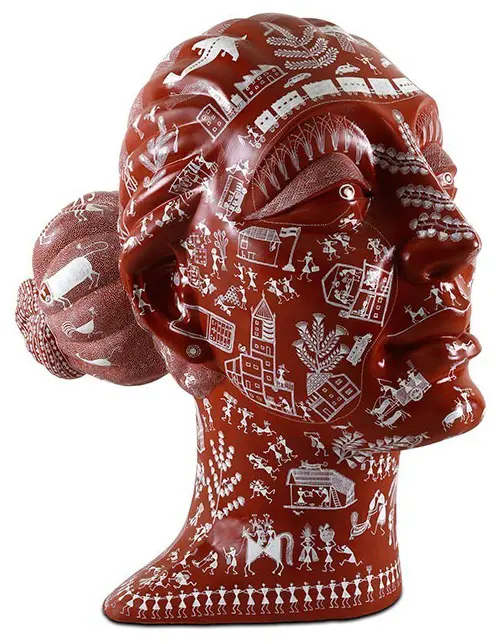
(Mother Nature | Anil Chaitya Vangad | Acrylic and automotive paint on fiberglass | 42 X 38.5 X 26.5 inches)
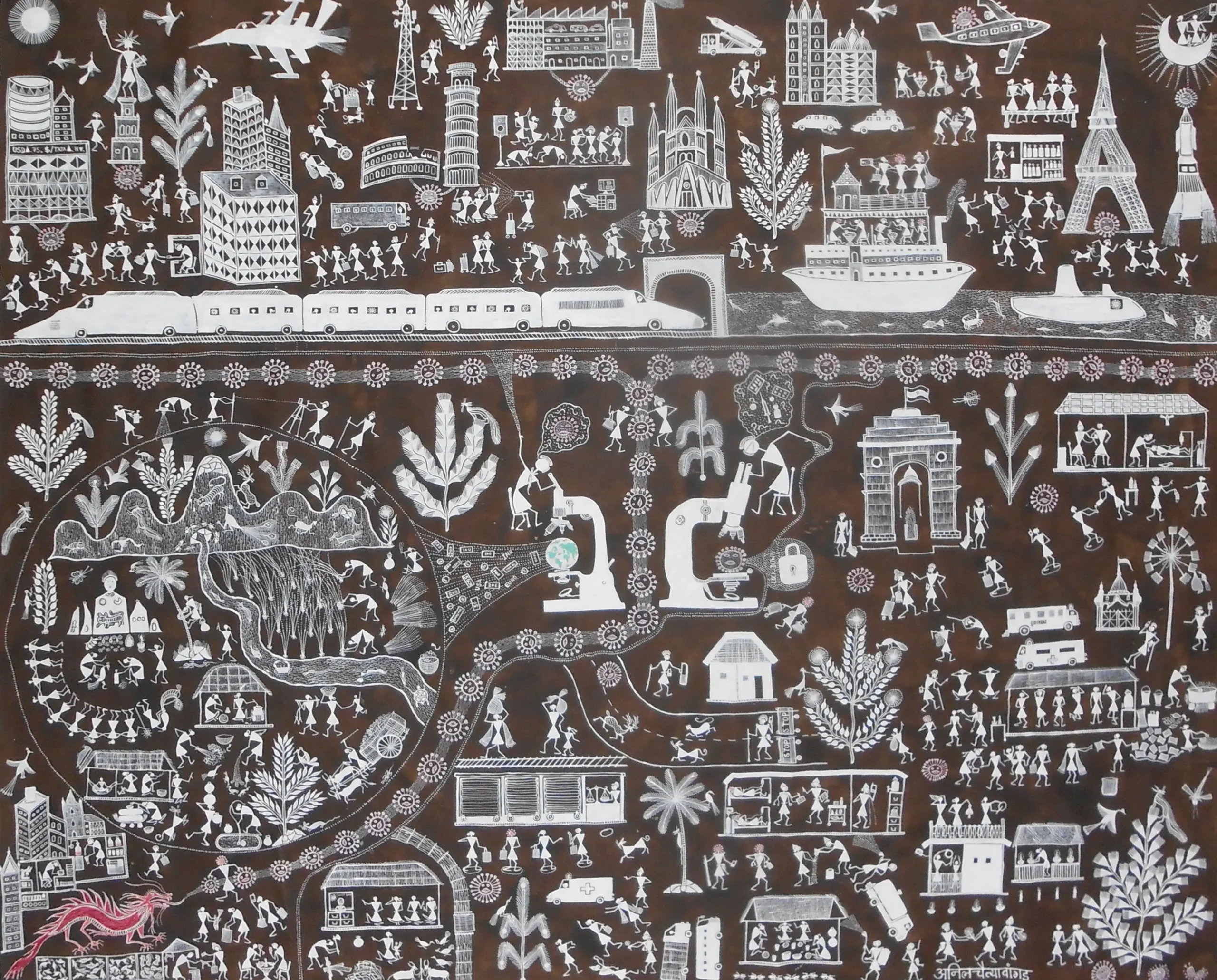
The journey from mud and wall to canvas & paper started in the early 1970’s as artists like Jivya Soma Mashe took their artistic creation from the village walls to art galleries. This has not just replaced tradition, but it has also given a value and an audience to their artwork outside of Maharashtra, that provide value and respect to the Warli artist. The traditional technique remains the same: rice, bamboo, hand-made drawing, and geometrical shapes. The values and emotions behind it have only changed in the surface of art from the walls to canvas.
Training the Next Generation
As a tradition of the Warli families to pass this periodic art form from generation to generation, many Warli families share this art with other audiences, so this art form has stayed alive for many years. They organise workshops on learning this traditional art form for young children and adults. This unique style of workshops runs “Dahanu and Palghar”, where kids learn by watching the adults artits, when kids see their work has been valued, they build more interest. This made them stick to learning this art form more instead of moving to other labour jobs.
Using Modern Platforms For Warli Art Awareness Without Losing the Roots
Online fairs, exhibitions, and artistic auctions open a new window for Warli art to be preserved for many centuries. Online workshops encourage people to take part in knowing, understanding, and valuing the Warli art and preserving it. The key story is that this art still stays alive, and the core remains intact. Every piece still shows the relation of humans with nature, the elements like river, shapes, the Tarpa Dance, and the love for nature is the same. Only the medium of representing this art form has changed.
Collecting Warli Art Today
Warli art is a unique style and artistic creation that is not just limited to their community, as it has moved to other states and cities nowadays. There are tremendous Warli designs that have been used in home decoration, clothes, traditional Indian wear, sarees, cushion covers, wall clocks, decorative items, notebooks, and even in packaging material. The minimalistic design and geometrical shapes perfectly fit the modern lifestyle with a cultural touch.
This adaptation shift opens new doors for warli artists’ new income sources with the help of technology and social media networking. Warli artists can now sell their art on online platforms and earn some gross income, or even at exhibitions.
Conclusion
Warli art states that culture doesn’t need to be dominating and powerful to be followed with just circles, triangles, and lines with rice on an earthy wall. The Warli tribe represents the visual language that has been preserved for 3,000 years, that are also represented in the Art Gallery in Chandigarh.
At AIM Gallery, we believe it is more than an art form or a decorative item: it’s a bond between humans and nature that represents farming, festivals, and cultural values. Today, Warli art has been moved from the art gallery walls to families’ homes and lifestyle, and for some modern families, it has also been an essential part of their style statement.