





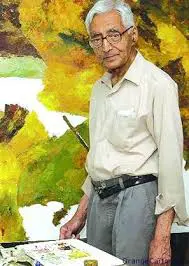
Born in Simla in 1924, Ram Kumar became one of India's most celebrated modernist painters. He initially studied economics in Delhi before moving to Paris in the late 1940s to train under Western master artists. As a vital member of India's first generation of post-colonial creators, he successfully mixed global modern style with a deep, authentic Indian identity.
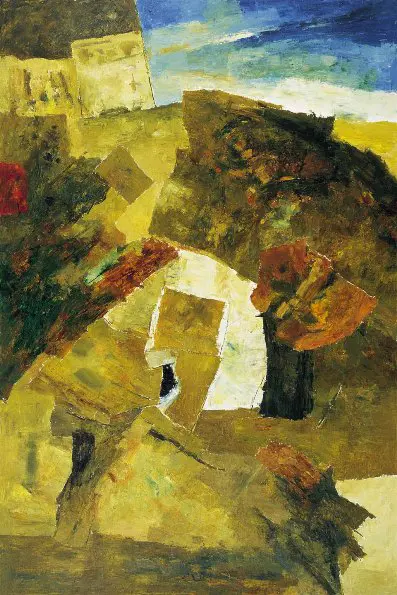
His artistic journey evolved beautifully over the decades. His early work engaged directly with city life and social duties, but he later shifted his focus toward abstract landscapes and spiritual introspection. This transition mirrored a delicate balance between worldly connection and quiet renunciation. He frequently used his brush to explore the powerful forces of nature, time, and transformation.
In his later years, Varanasi became a central inspiration for his canvases. He portrayed the sacred city as a peaceful meeting point between the earthly world and eternity. His final pieces showed a wonderful harmony between strict geometric lines and a soft, romantic appreciation for nature's beauty. By treating the landscape almost like a loved one, his art captured a pure, joyful connection with the world. The legendary artist passed away in 2018, leaving behind a rich visual legacy.