





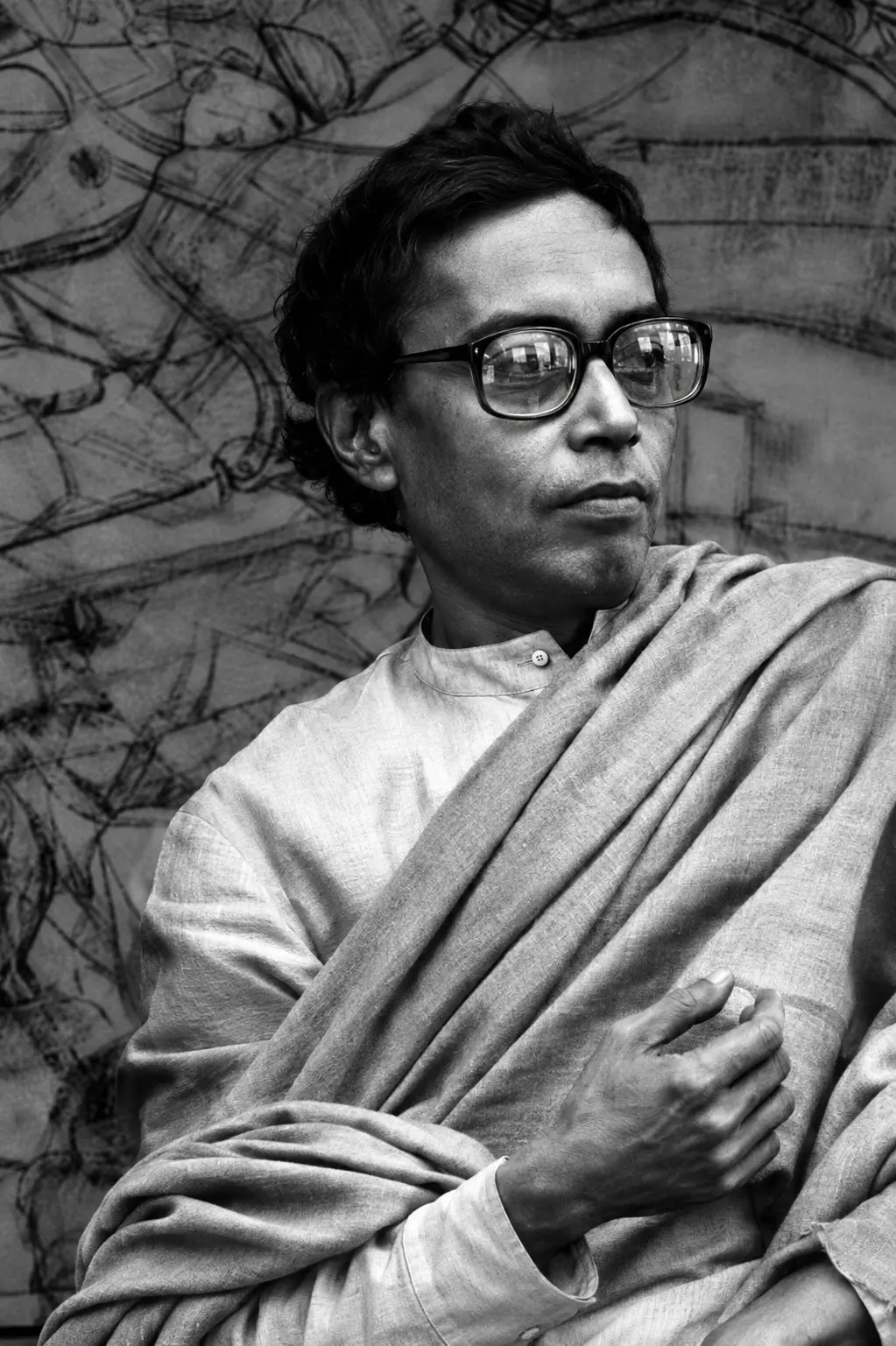
Ganesh Pyne (1937–2013) was a legendary Indian modernist from Kolkata who pioneered a distinct style of poetic surrealism. His artistic vocabulary beautifully blended Bengali folklore with dark, dreamlike fantasy. This melancholic aesthetic was deeply rooted in his childhood, where the devastating loss of his father and the horrors of witnessing the 1946 Calcutta riots left a lasting psychological mark. Consequently, he became widely recognized as the "painter of darkness," routinely exploring themes of mortality, alienation, and pain.
After graduating from the Government College of Art & Craft in 1959, Ganesh worked as a book illustrator and animator. His creative medium transitioned from early watercolors to a sophisticated mastery of gouache and tempera. He brilliantly bridged the traditional practices of the Bengal School with global inspirations, including Rembrandt's mastery of light and shadow, Paul Klee's simplicity, and European art cinema.
Though highly praised by peers like M.F. Husain, Ganesh shunned the spotlight and resisted commercial art markets. He rarely exhibited his work and delayed his first solo exhibition until after age fifty. Honored with the Raja Ravi Varma award, his haunting, intimate legacy continues to deeply influence modern Indian painters.