





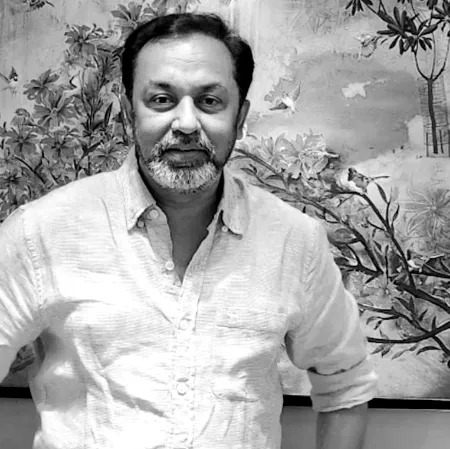
Arunanshu Chowdhury is a profound contemporary artist whose work serves as a silent reflection on urban life, political tension, and the fragility of human existence. Born in 1991 in Hooghly, West Bengal, he transitioned from his native roots to Vadodara, Gujarat, where he completed his formal education at the Maharaja Sayajirao University. His journey into art was organic, beginning with dough sculptures made with his grandmother and influenced by his mother, an art teacher.
Living in Baroda deeply impacted his creative vision. His paintings often confront themes of societal violence and political unrest, specifically reacting to historical events like the Gujarat riots and nuclear testing. Rather than using graphic imagery to shock, Chowdhury creates a "haze of memories" that leaves the viewer with a haunting sense of vulnerability. He frequently uses everyday objects such as rickshaws, barber chairs, and rocking chairs as "silent witnesses" to the chaos of urban atrocities. These protagonists tell complex stories of societal pressure and the shallow nature of modern life without uttering a word.
Technically, Chowdhury has evolved from traditional watercolors to expansive canvases and ambitious mixed-media sculptures. His style involves juxtaposing multiple images to mimic the frantic pace of the material world. His excellence has been recognized with prestigious honors, including the Elizabeth Greenshields Foundation Grant from Canada. Through his layered and often monochromatic textures, Chowdhury continues to investigate the "unnatural need to belong," making him a vital voice in documenting the evolving identity of the Indian city.